Crop progress
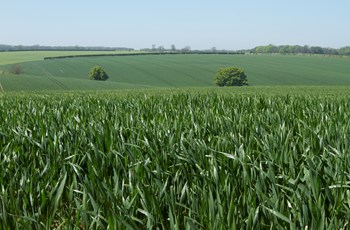
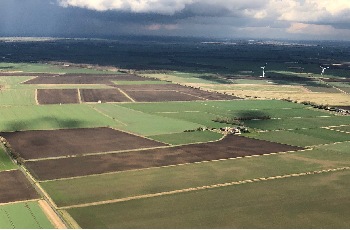
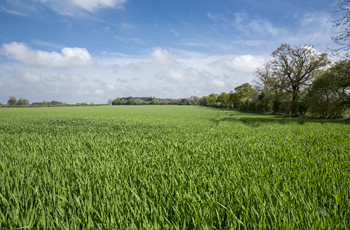
It has been exceptionally dry in the East. Despite the lack of rain, crops generally look well and a few mm of welcome rain over the weekend has helped canopies grab hold of nitrogen.
Oilseed rape crops are particularly variable in terms of flowering, which is largely down to cabbage stem flea beetle larvae infestation.
Sam’s agronomy tips for May
- Don’t be complacent against septoria in drier conditions
The cool conditions in mid-April slowed leaf development and regulated crop height. This may increase the overlapping of the tip of leaf 3 with leaf 1 as it emerges later in May. It should be noted that septoria spread is not only about rain splash – physical contact between leaves can also move septoria up the canopy. Dewy mornings, combined with thick, high biomass wheat crops could maintain the septoria infection risk, even if rainfall remains low.
- Use a robust T2 fungicide to sleep easy at night
In addition to the risk posed by physical spread of septoria, a number of other factors must be taken into account when deciding on T2 fungicide strategy.
Firstly, there is septoria in the base of many wheat crops despite the cool dry weather experienced for much of the spring. This varies in severity depending on variety and drilling date, but the inoculum is there because crops carried plenty of biomass through the mild winter. Secondly, think about what has been applied up to now. Many T1s have been light in both strength of product and dose, potentially increasing disease risk ahead of T2. Finally, it should be remembered that the T2 application ensures maximum retention of green leaf area of the top two leaves, which contribute to around 65% of yield.
Ascra (bixafen + fluopyram + prothioconazole) at 1-1.2L/ha plus chlorothalonil is the primary T2 choice and bixafen-containing Xpro formulations such as Ascra also have a label claim of enhancing chlorophyll content, improving photosynthesis and extending green leaf retention, improving yield above that resulting from disease control alone. If there is any active rust ahead of the T2 timing, consider adding in a rust-active strobilurin.
- Do all you can for ramularia in barley crops
Ramularia severity is associated with leaf wetness during stem extension. Although it has been largely dry through this period, symptoms of the seed-borne disease will be triggered by stress conditions at anthesis and the inclusion of chlorothalonil should be applied as a matter of course to all T2 fungicides to minimise risk. This is due to insensitivity of some ramularia isolates to azoles, SDHIs and strobilurins that underpin barley fungicide programmes.
Growers should do all they can to minimise crop stress at flowering and recent rain will have aided availability of nutrition. An application of Siltra (bixafen + prothioconazole) at 0.4-0.5L/ha added to the CTL will provide the most robust protection against ramularia and control all other barley diseases. It is likely a pre-paint brush growth regulator was applied to avoid bounce-back and the chlorothalonil may have already been applied as some brands of the multisite have an early application cut off.
Spring barley crop development is variable and is dependent on drilling date. As a rule, two 0.4-0.5L/ha applications of Siltra at late tillering (T1) and awn emergence (T2) is recommended, with CTL added in the second spray. For later drilled crops a single application at the higher rate of Siltra Xpro with CTL may suffice.
- Use a broad-spectrum fungicide in flowering OSR crops
Up until the last week of April as well as being too dry, night time temperatures have been too low for any risk of sclerotinia infection. However, soil temperatures are now high enough for sclerotia germination and any rain that materialises increasing humidity within crop canopy could trigger an infection risk.
In the main, crops have not received a flowering fungicide because of the cool dry conditions but could now be at risk. The risk is increased where flowering is prolonged or protracted as a result of increased branching and damage created by the CSFB larvae. An application of 0.46L/ha of Proline (prothioconazole) is recommended for what is likely to be a single spray strategy.
Proline is the broadest spectrum option available as it will control both sclerotinia and light leaf spot, of which the final SpotCheck Initiative test results in April revealed is at high levels amongst crops. It will also suppress any powdery mildew and Alternaria as the crop matures.
- Be vigilant of aphid migration into sugar beet crops
With growers into their first season without neonicotinoid seed treatments to reduce virus yellows transmission, the warm weather over the Easter weekend saw the start of the 120-day emergency authorisation for two applications of Biscaya (thiacloprid) for Myzus persicae control. Migration of the pest into crops wasn’t far behind and thresholds will likely be upon us imminently. An application of 0.4L/ha should be applied at threshold and crops monitored for further migration. Persistency is related to temperature, but as crops are growing fast, it must be remembered that newly emerging leaves will be unprotected, so be vigilant for a second spray at threshold. Remember the impact on yield from virus transmission will be greater on smaller plants. To add to this, the first generation of mangold fly is also starting to be observed.
Although a logistical challenge, advice has to be, to keep the insecticide application separate to herbicide applications.
- Choose best beet herbicide in tough weed control conditions
Dry conditions reduced efficacy from any residual herbicide applied to sugar beet crops. In addition, weeds inevitability found some moisture and where crops have caught any recent rain, weeds are taking off, and so growers may have to take a punchier approach to upcoming herbicide applications. Betanal MaxxPro (desmedipham + ethofumesate + lenacil + phenmedipham) is the strongest and safest option in these situations to get the programme back on track without compromising crop growth.