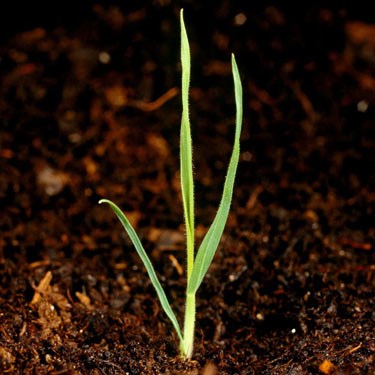
Common Name:
Yorkshire fog
Latin Name:
Holcus lanatus
Tufted softgrass, Velvet grass
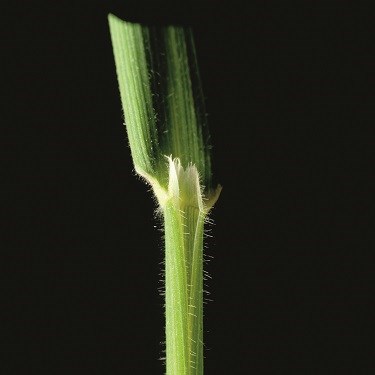
Ligule:
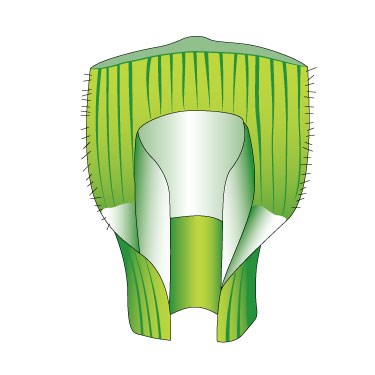
Auricles:
Absent.
Leaf blade:
Pale greyish-green narrowing to a fine point. Very hairy and velvet to touch. Rolled.
Description:
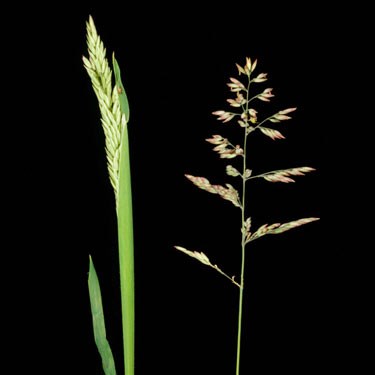
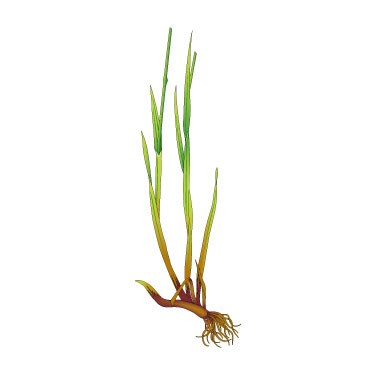
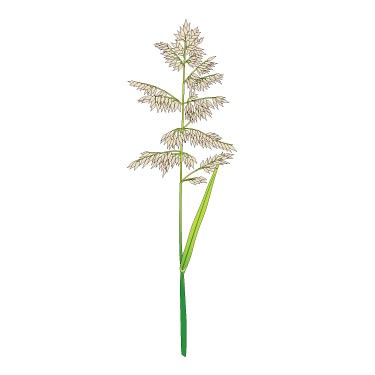
Tufted very hairy perennial 20–100 cm. Veins of basal leaf sheaths are pinkish-red. Flower heads are whitish, pale green, pinkish or purple. No rhizomes.
Importance:
Very common and widespread on a broad range of soil types. Not usually an arable problem but may spread in fallow ground or grass breaks. Of some value for grazing when young.
Lifecycle:
Established plants do not grow through the winter bur form new shoots in the spring. Seeds can germinate rapidly and are viable across a wide temperature range. The seed is, however, small and while it can travel long distances on the wind seedling vigour is poor.
Management:
Yorkshire fog is seldom a problem within crops. Populations can be managed through spring cropping and deep cultivations.