Common name:
Couch grass
Latin name:
Elytrigia repens
Common couch, Twitch, Rack, Scutch, Wickens, Quack grass
Ligule:
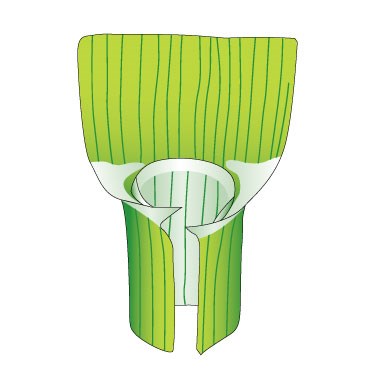
Auricles:
Short and pointed.
Leaf blade:
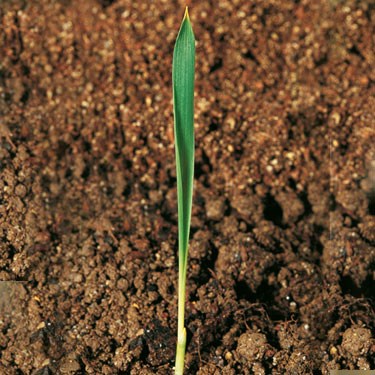
Dull green, long, flat and slightly keeled. Both surfaces are loosely hairy.
Description:
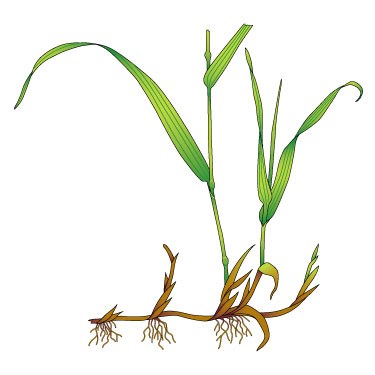
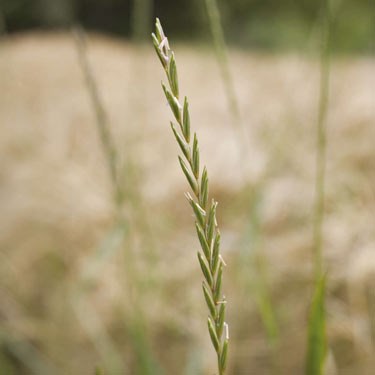
Familiar perennial spreading by extensive long, stout and sharply pointed white rhizomes. The flower head might be confused with perennial rye-grass. However, the spikelets of couch lie flat against the stem, unlike perennial rye-grass where the spikelets are at 90° to the stem.
Importance:
Common in arable and waste ground. Heavy populations cause lodging and harvest losses. Seed production is variable and low with spread mainly by rhizomes. Rhizome production can be up to 15 t/ha on light soils.
Cough grass is a host for Violet root rot (Helicobasidium purpureum), Swift moths (Hepialus lupulinus and H. humuli), Ergot (Claviceps purpurea) and Take-all (Gaeumannomyces graminis).
Lifecyle:
In arable land couch grass spreads mainly by the creeping underground stems (rhizomes) although the seed is also an important means of spread.
The rhizomes spread through the soil forming a dense mat. In cereals, couch growth is most rapid during ripening when the crop becomes open and light. Spread is further encouraged by cultivations which tend to break up the rhizome mat. Any small piece of rhizome, providing a node is present, can grow as an independent plant unless killed by further cultivations.
Seed production is variable and is low compared with annual grasses. Seeds are only viable if flowers have been pollinated from a separate clone. In most field situations sufficient closes are present to allow viable seeds to be produced. On average 10-20 viable seeds are produced per flowering head but in some cases, this could be 4 or 5 times higher.
Most seeds, 80-90% germinate in the first autumn if they are in the top 5-7 cm of the soil. Few germinate from deeper in the soil, but they can survive for 4-5 years.
Management:
Intensive cultivations at 2 to 3-week intervals will exhaust the rhizomes energy reserves by repeatedly stimulating growth. Weakened rhizomes should be buried as deeply as practicably possible.