White Rot
Sclerotuim cepivorum
Sclerotuim cepivorum
Fungus
Onions, leeks, chives, shallots and garlic
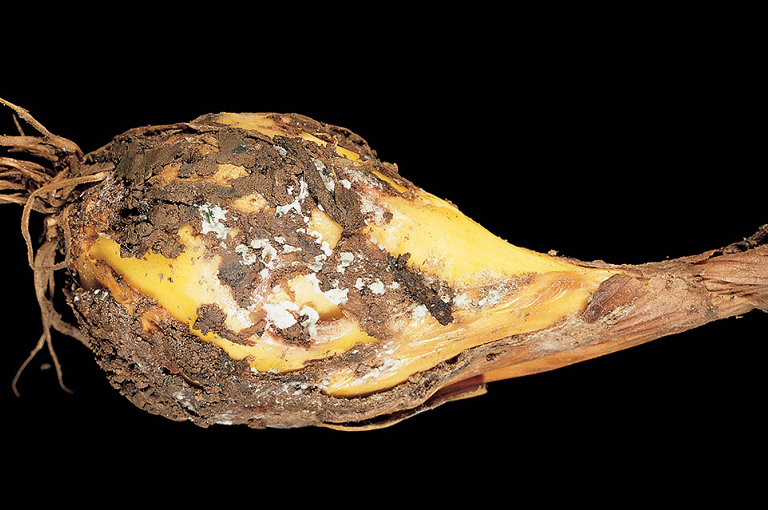
Initially symptoms are yellowing and wilting of plants leaves in patches within the crop. After the collapse of the leaves a rot sets in with a mycelial white cotton wool growth around the base of the bulb with small black (0.5-1mm across) sclerotia embedded within. Leeks are affected to a lesser extent and can also be found in chives, shallots and garlic.
The sclerotia can survive in the soil for many years (with some sources suggesting this could be as long as 15 – 20 years). With soil temperatures above 10 °c these germinate, in response to Allium root exudates, to produce mycelial hyphae which directly invade plant roots. Once a plant has been colonised the mycelium can spread to nearby adjacent plants via contact with roots or bulbs or can move short distances through the soil usually along the crop row.
Favourable Factors
Warm soil temperatures above from mid-summer until early autumn.
One of the most significantly important worldwide diseases of onions. Affected bulbs are unmarketable.
Find out more information on the key disease threats to your onion and leek crop. For each disease you will find out the importance of the disease in terms of potential yield penalty, how to identify the disease in its early stages and our advice on the best control strategies.