Club Root OSR
Plasmodiophora brassicae
Plasmodiophora brassicae

Plasmodiophora brassicae
Fungus
Oilseed Rape and affects all cultivated brassicas as well as cruciferous weeds such as shepherd`s purse and charlock.
Patches of the crop wilt, exhibit stunted growth and have swollen, misshapen roots which decay by rotting.
Resting spores of the fungus can survive in the soil for up to 20 years and infect cruciferous crops and weeds through their root hairs. The fungus then stimulates root cell multiplication and produces spores which reinfest the soil during root decay.
Cool, wet weather.
Widespread in the UK but more prevalent in Scotland and the wetter west of the UK. In Scotland yield losses of in excess of 50 % have been recorded. Severe disease pressure in wet conditions can lead to complete crop loss.
• Resistant varieties such as Mendel , Cracker and more recently Mentor do offer useful control, however some resistant strains of clubroot have built up to overcome the main gene resistance where these varieties are repeatedly grown in infected fields in short rotations
• Adopt a long a long rotation of 6-8 years between susceptible cruciferous and oilseed rape crops
• Improve drainage and apply lime as necessary
• There is no satisfactory chemical treatment, but effective cruciferous weed control may reduce disease incidence.
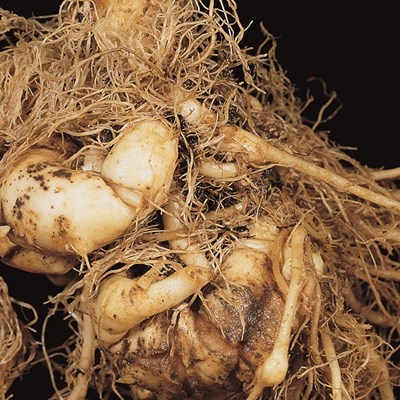 Characteristic swollen roots caused by clubroot
Find out more information on the key disease threats to your oilseed rape crop. For each disease you will find out the importance of the disease in terms of potential yield penalty, how to identify the disease in its early stages and our advice on the best control strategies.