Powdery Mildew
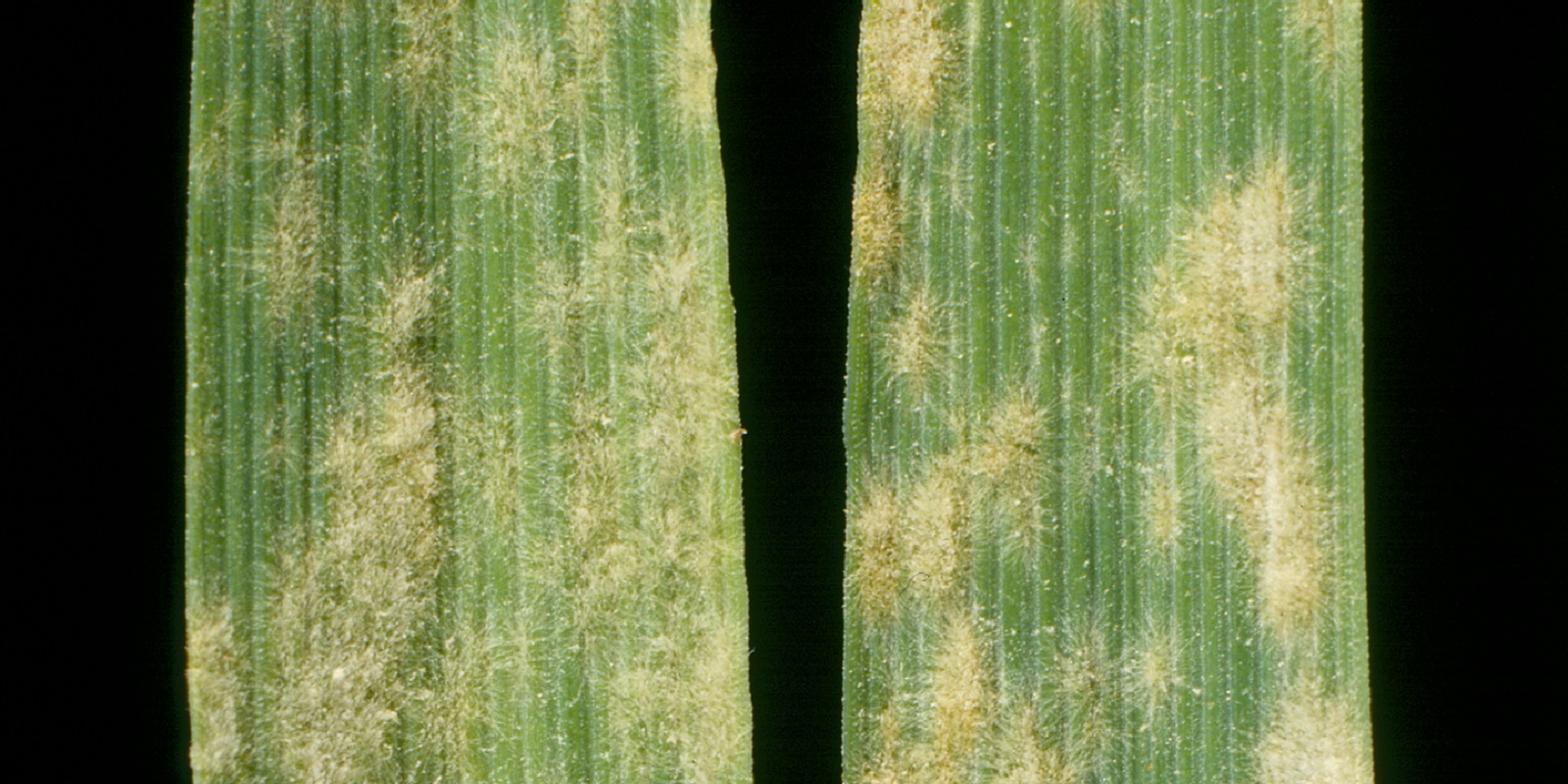
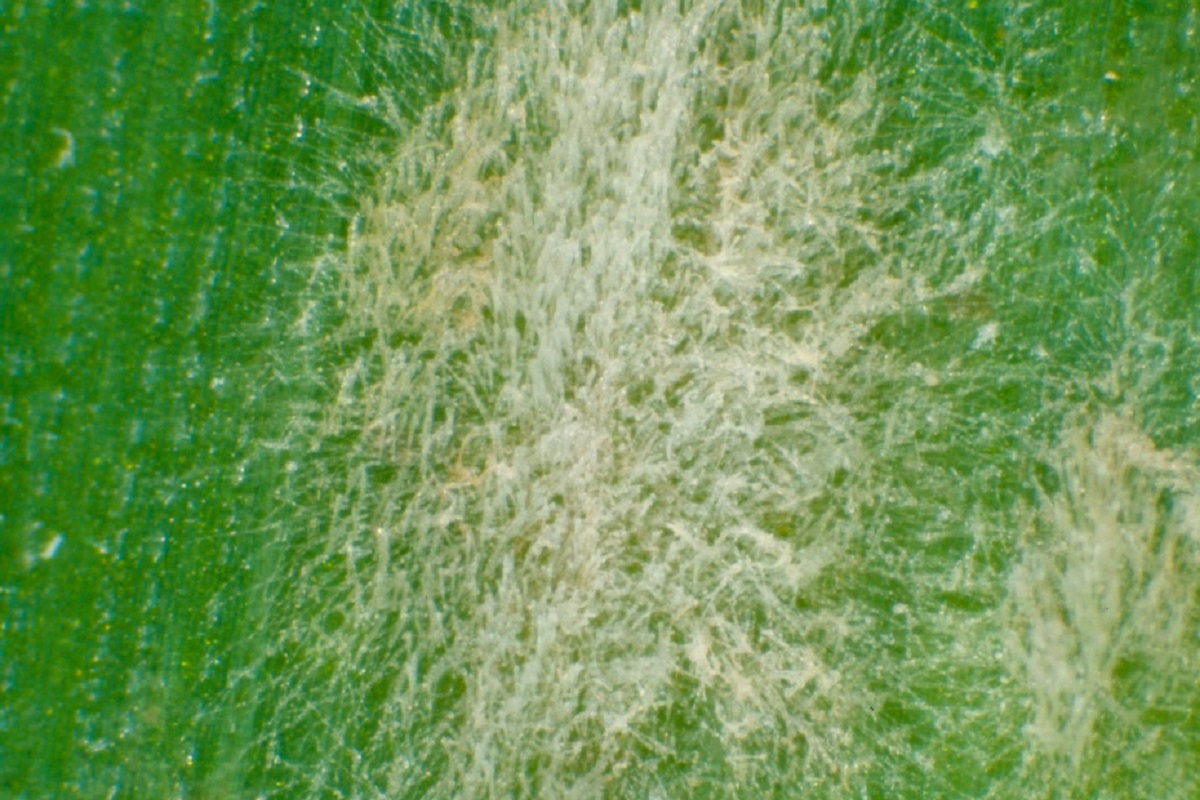
Powdery mildew on barley & close up of mycelium
Powdery mildew on barley & close up of mycelium
Rhynchosporium secalis
Fungus
Barley, rye, grasses
The first symptoms are large (1cm) pale green watery oval lesions on the leaf blade. These turn pale brown and develop a darker margin. In severe attacks lesions become crowded and lose their characteristic shape and colour.
Often the first lesions appear near the base of the leaf (water running down the leaf tends to deposit spores in this position). The lesions then develop and can lead to total loss of the leaf. The leaf sheaths and ears can also be infected.
The inoculum for infection comes from previous barley crops, volunteers, seeds and grasses. The disease is spread by rain splash and dew.
Cool (10°C to 15°C) and wet weather conditions. Early sowing, susceptible varieties and high rainfall contribute to severe attacks.
Yield loss up to 40% in severe attacks but more often between 2% and 5% due to a reduction in grain size.
• Correct use and mixtures of fungicides during the growing season will give good control
• Stubble cleanliness
• Correct choice of variety
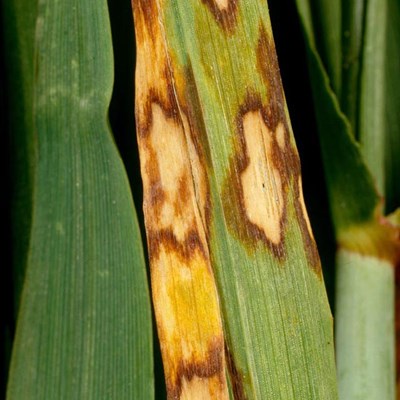 Typical rhynchosporium lesions
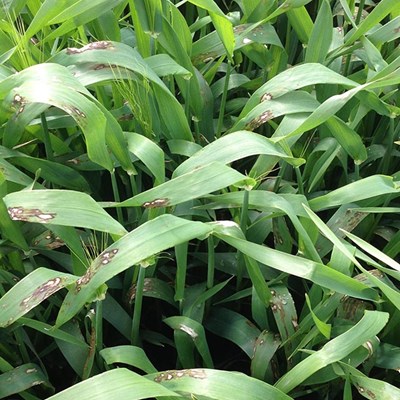 Leaf symptoms
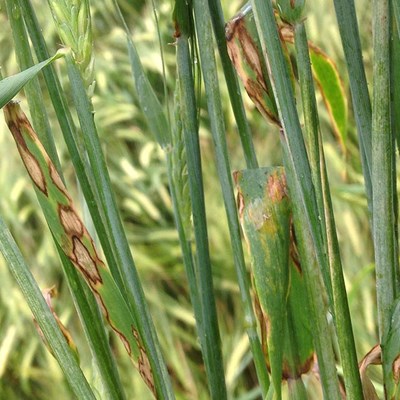 Well developed rhynchosporium infection
Find out more information on the key disease threats to your cereal crop. For each disease you will find out the importance of the disease in terms of potential yield penalty, how to identify the disease in its early stages and our advice on the best control strategies.