Powdery Mildew
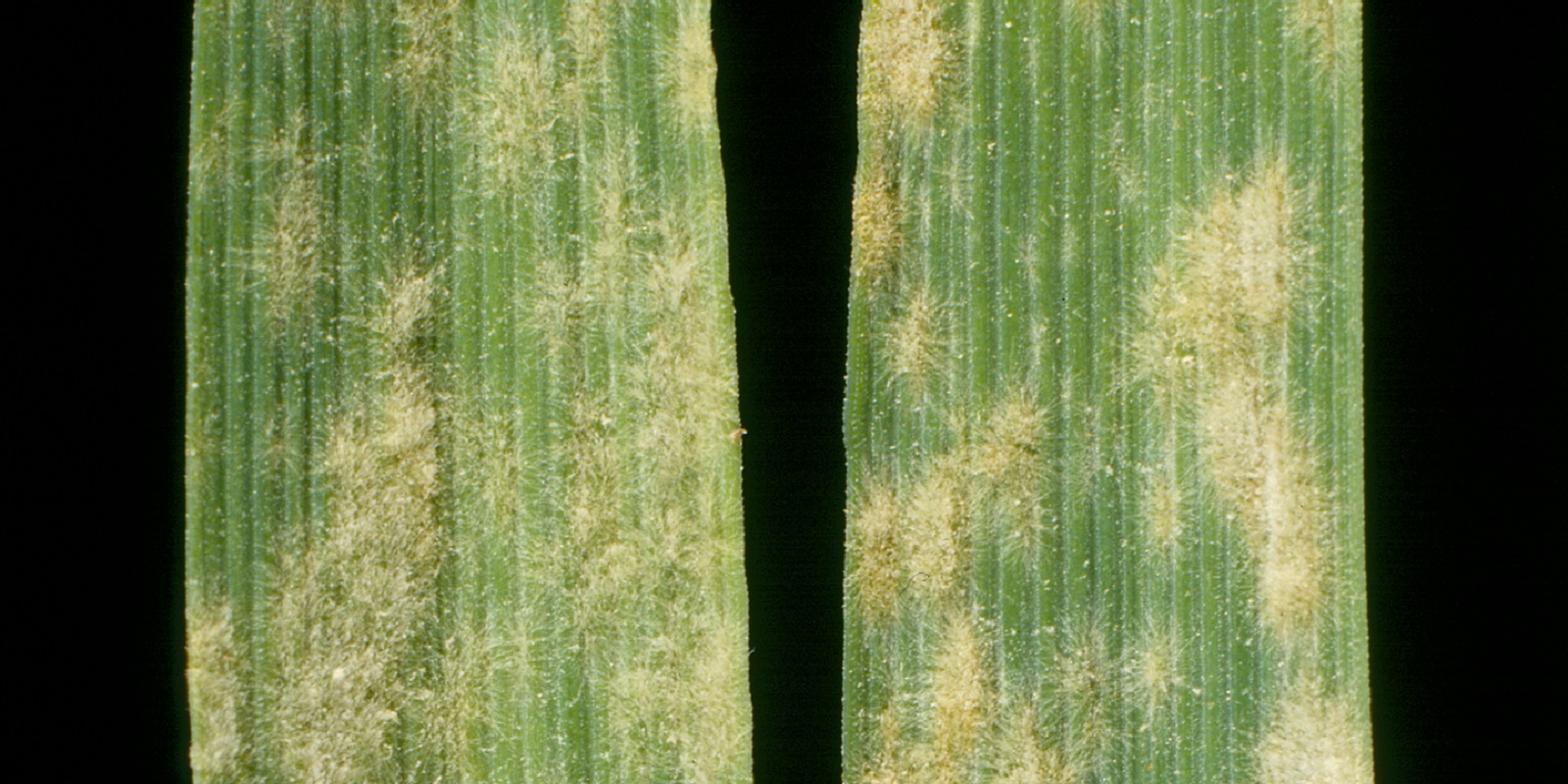
Powdery mildew on barley & close up of mycelium
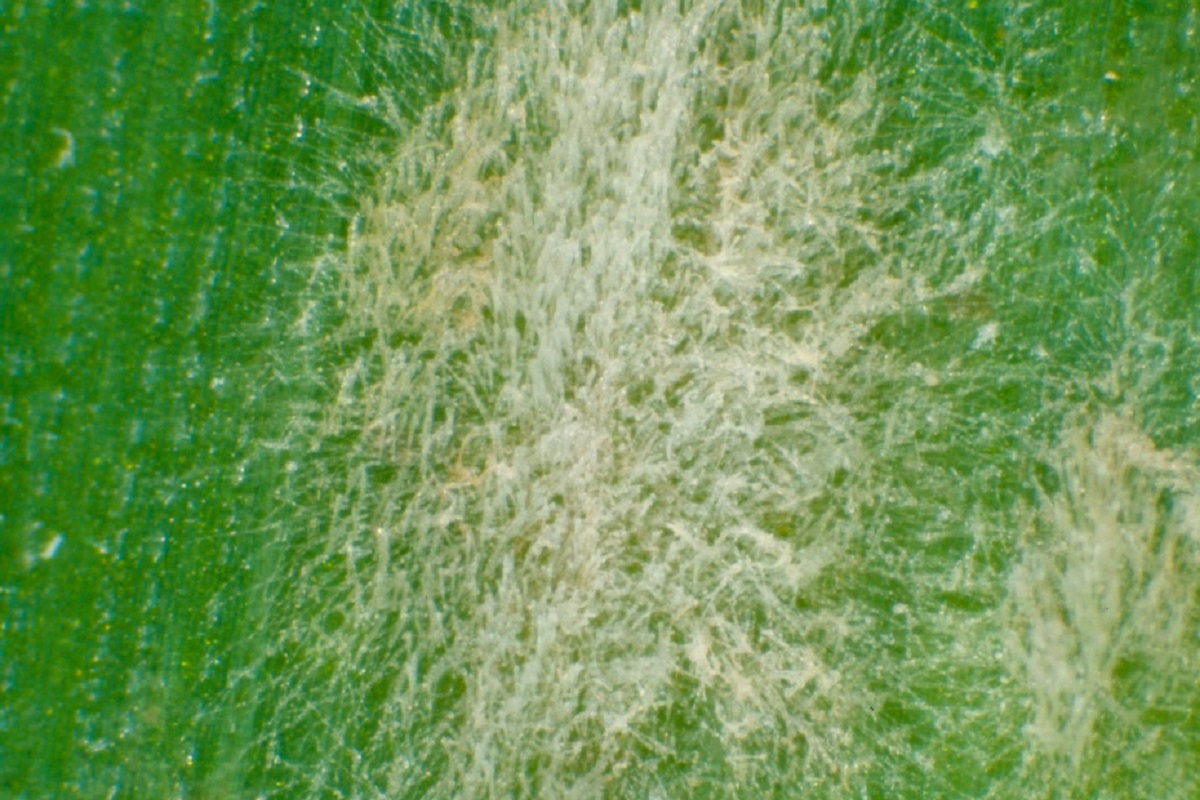
Powdery mildew on barley & close up of mycelium
Fungus
Wheat, barley, oats and grasses
White cotton wool pustules appear on the leaves, the stem and on the ear. The pustules can easily be rubbed off and the tissue is discoloured brown underneath. With time the pustule itself turns brown and black spore cases (cleistothecia) can be seen embedded in the fungus. Occasionally a reaction called hypersensitivity occurs on barley varieties with a high disease resistance rating. The symptoms are small brown flecks with no evidence of mildew pustules. The reason for this is that the infective mildew spores germinate on the leaf and begin to infect the plant. The host tissue dies and the mildew no longer has living material to grow in and a small, brown lesion results. It is also possible that fungicidal phenolics are generated by the dying tissue.
Powdery mildew can only grow on green plants. It survives the harvest period on late tillers releasing spores that are spread by the wind to infect the new crop. The usual life-cycle duration is 5 – 7 days.
Ideal growth conditions are temperatures of between 15-22C and humid (but not raining/free water) weather. Wind aids spread. Temperatures above 25C check disease spread. Rapidly growing thick crops provided with high levels of nitrogen are more susceptible, particularly some susceptible varieties as described by recommended list ratings.
Mildew diverts nutrients from the plant to the fungus and increases respiration and transpiration. Severe early season infections, although very conspicuous, don`t impact on yields on a comparable scale to Septoria (on wheat) or rusts. 10% to 15% yield loss in barley is common but can be as much as 40%. Yield loss wheat is not as high, but can be up to 20 % where disease pressure is severe. Grain filling is reduced leading to shrivelled grain and a poor sample.
Find out more information on the key disease threats to your cereal crop. For each disease you will find out the importance of the disease in terms of potential yield penalty, how to identify the disease in its early stages and our advice on the best control strategies.