Grey Mould
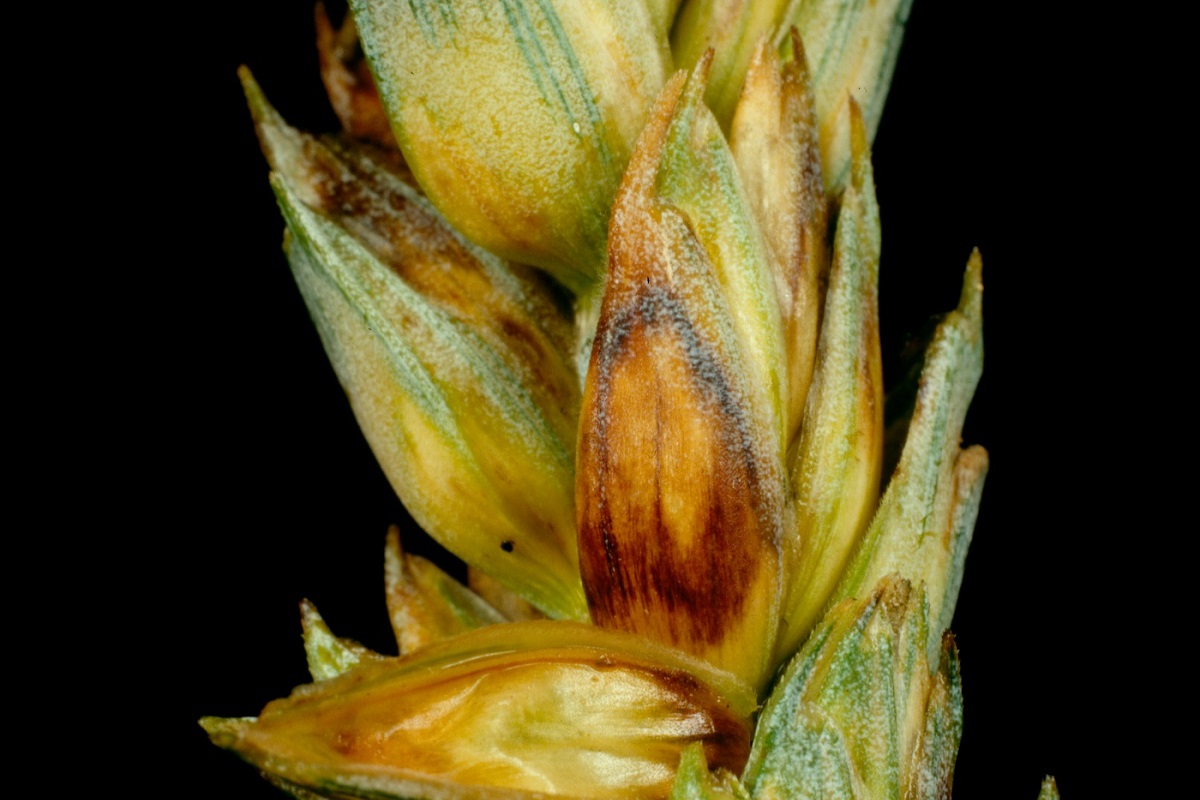
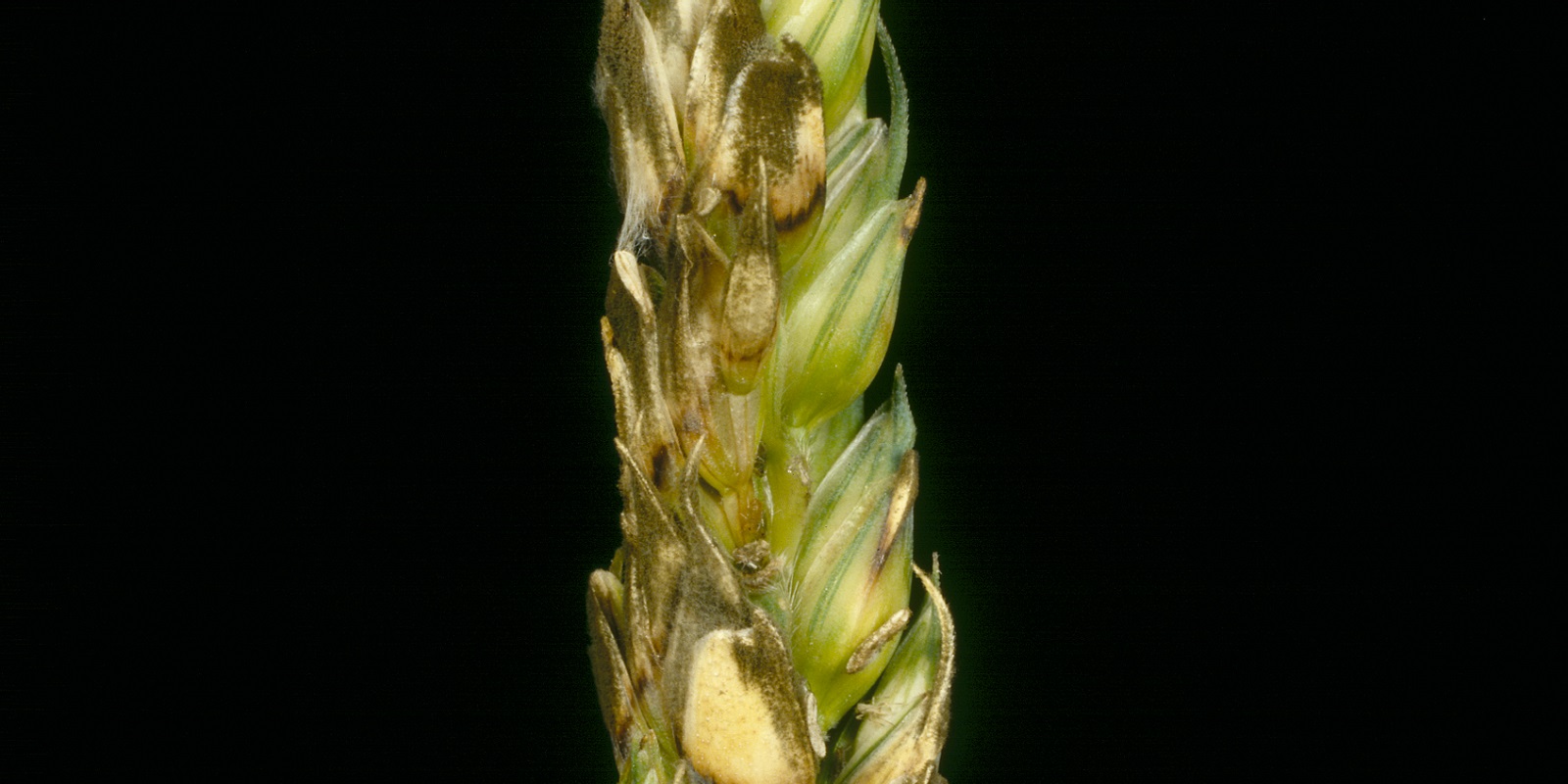
Grey mould close up & grey mould on a wheat ear.
Grey mould close up & grey mould on a wheat ear.
Fungus
Wheat
Brown speckling, sometimes quite extensive, appears on upper leaves often in the presence of shed pollen. Individual grains on the ear are also infected. Ear infection gives rise to a straw coloured lesion on most of the glume, the developing grain is then destroyed.
Airborne spores arise from the dead and decaying material.
The disease is favoured by cool, wet conditions from ear emergence onwards.
The effect on yield is not dramatic but quality is substantially reduced with a shrivelled, dull and dirty sample. Germination, importance for seed crops or brewing grains will be impaired. The thousand grain weight will be reduced indicating the amount of shrivelled grain. If the infected grain is not dried properly, hot spots can be formed in the grain stores reducing quality even further. Generally only a problem in stored grain but the inoculum arises from grain which is infected during ear ripening.
Some fungicides, offer some degree of control.
Find out more information on the key disease threats to your cereal crop. For each disease you will find out the importance of the disease in terms of potential yield penalty, how to identify the disease in its early stages and our advice on the best control strategies.