Brown Rust
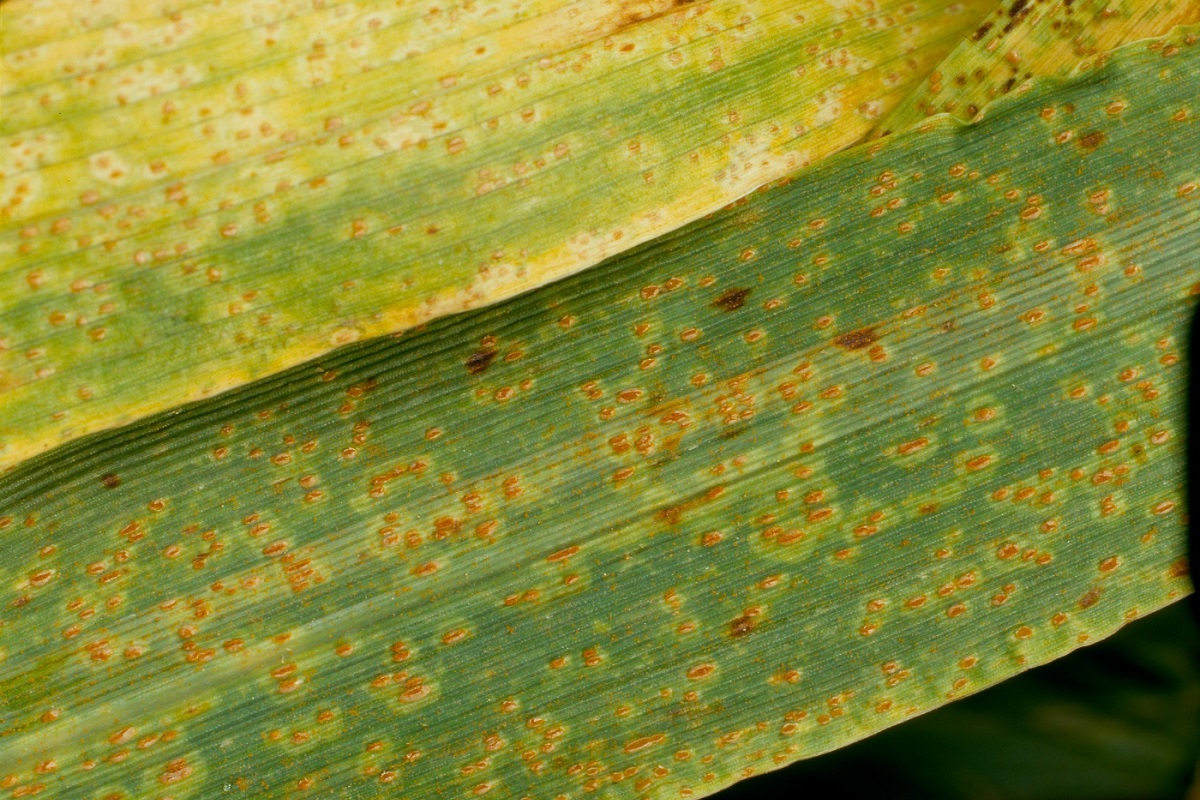
Severe disease pressure (Photo C.Lincoln) & Brown rust on barley
Severe disease pressure (Photo C.Lincoln) & Brown rust on barley

Fungus
Barley, wheat, rye & grasses
Brown rust species are specific to their host crop. First symptoms are scattered orange-brown pustules on leaves and occasionally on the stems, leaf sheaths and ears. Pustules often develop a yellow halo on barley. Small black pustules also develop on the underside of the leaf and these give rise to the infective spores. Severe attacks cover over 50% of the leaf area and occur late in the season.
The rust fungus can only grow on green plants. It survives the harvest period on late tillers and then spreads via volunteers to the subsequent crop. The spread is by airborne spores. Once inside the leaf, it produces very waxy and compact pustules deep inside the leaf which are harder for leaf systemic fungicides to target.
Warm temperatures (15C to 22C) with high humidity and free water all aid disease development. Dry windy days help further spread. Late doses of nitrogen also favour brown rust attack. Brown rust is killed at less than 5C and inhibited at temperatures above 25C, so hot summers and cold winters reduce inoculum. It has a 7 day cycle in mid to late summer.
Severe brown rust infections take out significant green leaf area and reduce the rate of photosynthesis needed for grain fill, and increase the rate of transpiration to cause drought susceptibility. Grain shrivel and specific weight reductions reduce both yield and quality. Severe attacks occur mainly in late season and can reduce yield by up to 50%. However 15% is more common.
Find out more information on the key disease threats to your cereal crop. For each disease you will find out the importance of the disease in terms of potential yield penalty, how to identify the disease in its early stages and our advice on the best control strategies.