Importance
All parts of the plant, including the seeds, contain toxins which can be harmful (especially to livestock) if eaten in large quantities or ingested over a long period of time.
Becoming increasingly rare but widely sown in wild-flower mixtures in fields and margins.
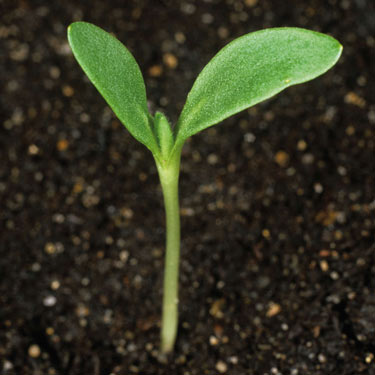 1. Primarily autumn-germinating with large coarse cotyledons approx. 30 mm long and 10 mm wide. Narrow linear leaves with grey hairs lying along the leaves. Upper leaves stalkless (sessile).
 2. Large terminal purple-red flowers on long peduncles with long, slim, pointed sepals.