Beware of ‘green bridge’ when spraying off stale seedbeds

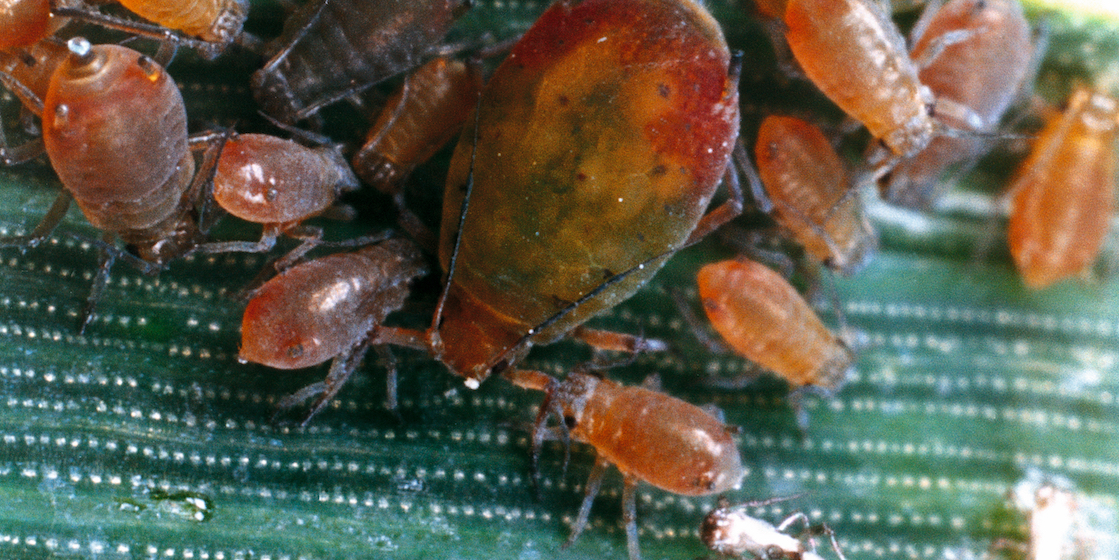
A short gap between spray off and drilling can leave a green bridge for aphids to survive and spread barley yellow dwarf virus into the new crop. Trials from Bayer show lower infection rates from a nine-day gap compared to two days.
"Cereal volunteers and some weed species can host grain aphids and Bird Cherry-oat aphids, the vectors of BYDV," says Bayer’s Matt Siggs. "When there is a short interval between spray off and drilling these aphids can survive on the dying volunteers and weeds, then quickly infect the new crop as it emerges."
Bayer trials from 2020/21 aimed to find out the optimal interval between green bridge destruction and drilling. The trials team released infected Bird Cherry–oat aphids among plots of cereal volunteers. Next, they sprayed off and drilled winter barley after a 2-day or 9-day gap.
Yields of barley in plots treated with Roundup (glyphosate) nine days before sowing, were significantly higher than in untreated and plots treated two days before sowing. Aphid survival was greatly increased by only having a 2-day gap leading to significantly higher levels of infection in the winter barley.
"The results are clear, try not to have a very tight turnaround between spray off and drilling where BYDV is a problem. With a short gap, aphids can survive on the dying volunteers and weeds to directly migrate to the newly emerged crop."
"Also, don’t assume 540g/ha glyphosate is the right dose for spraying off, there have been quite good growing conditions before, during and after harvest this year. We are seeing some fairly vigorous and large weeds and volunteers which will require more robust rates than may be assumed, so get agronomic advice."
Mr Siggs emphasises that an IPM approach is essential for BYDV management, utilising tools such as T-sum and selecting resistant varieties. Delayed drilling is also effective and fits in well with weed control programmes.
"Because of the longer gap between application and drilling, there could be concern about additional weed germination. Monitor carefully before drilling and consider Roundup in the pre-em mix at 540gms/ha if there is further weed emergence. But keep strictly to the true pre-em timing and of course get advice about it."