Family and farming matters keep the Boothmans busy

Posted 5 years ago
25/10/2021
It’s been a busy time for the Boothman family at Malton, Yorkshire.
Unseasonal weather pushed harvest back and the fine start to autumn has seen them ‘crack on’ with winter planting. That’s coincided with the start of the rugby season for Ben – four wins in five games being a solid start to National League for Hull RUFC, who currently sit fourth.
But the bigger news is the birth of Grace for Chris and wife Kirsty. Child number two arrived just after 5.00 am on Monday 27th September. But pressing farming matters saw Chris back out drilling on the 29th.
Despite harvest delays, yields were a little better than expected, with some first wheats doing 11.6 t/ha and most second wheats over 10 t/ha. That surprised Chris as vegetative data via Climate FieldView earlier in the season revealed less biomass for the 2020/21 season than the one before. Chris feels there was just enough sunshine in June and July to see crops through.
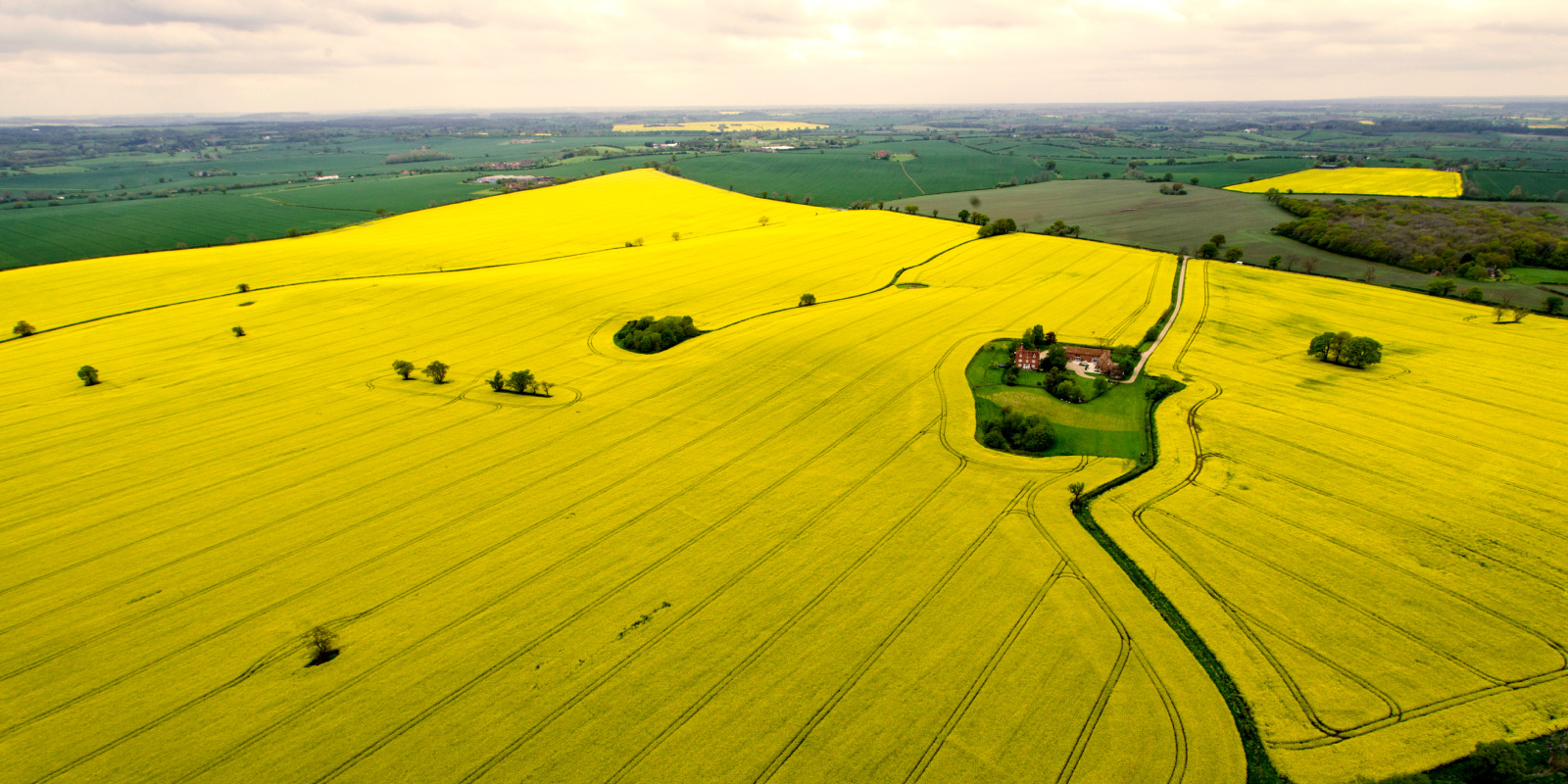
The rape did remarkably well, considering how thin it looked on the run up to flowering. Frosts and dry, cool weather extended flowering to eight weeks and it impaired pod formation. But then it got going again with new growth boosting pod numbers, average yields coming in close to 5t/ha.
Chris feels thinner crops might have allowed more light to penetrate the lower canopy and better access for beneficial Pollinators.
Nutrition is one factor in last season’s better than expected performance, particularly the oilseed rape. Crops got an early dose of N to ‘kick start’ them. “Our wetter soils can be hungry and a dry spell created a window so we went. It was a little earlier than we normally go but it paid off,” says Chris.
As a result, N strategies will come into focus this season. The Boothmans are planning to apply fertiliser variably. They’re taking soil samples and are hoping that their Isobus spreader can take a prescription made in SOYL and record the application map back into FieldView.
With the North Yorkshire Moors as a backdrop, there’s possibly fewer scenic places to farm but climate and topography can be handicap. In late October the weather usually turns and Chris points out crops have to be up and away by Bonfire Night or they are in trouble. Soils can stay wet, and there are areas of compaction, or poor drainage. Chris and Ben are in the process of rectifying these, and min-till and direct drilling is helping, previous crop roots aiding drainage and earthworm populations.
But this will never completely compensate soils and the ‘lie of the land’ so the Boothmans want to be matching N rates to the variability over fields. “Flat rate fertiliser might suit the majority of a field but not all of it. Typically, we apply around 220 kg/N/ha, which in some areas might be a little light but the bigger concern is where N rates are too high for field areas where yield potential is compromised.
We need to find the appropriate N rates across our fields to optimise yield and input efficiency,” notes Chris.
This is where FieldView fits in, the ability to overlay prescriptive data with detailed crop performance.
Chris describes it as an ‘eye opener’, revealing the yield variation across a number of fields. He particularly likes the option to compare field performance over various seasons using FieldView’s split screen functionality.
A further plus is the vegetative and scouting imagery within the field health tools. “You get a different perspective from the air,” he says. He has used FieldView and Google Earth satellite images to highlight potential field problems, which can then be ground truthed when field walking.
Ben and Chris and want to take precision farming further and a new sprayer with section control will make this possible. They were hoping to apply seed variably but with harvest delays and ideal Autumn conditions there was little option but to push on and take advantage of the drilling window.
Fair weather helped create an ideal seedbed. As a result, winter wheat rates have been trimmed from the usual 250 kgs/ha to 220 or 230 kgs/ha. Good seedbeds eliminated the need for rolling, and rain soon after further helped a good start to the 21/22 season.
Getting away is why Extase is back in the ground this season. The Boothmans like its disease profile but also its ability to get up and away quickly. Dawsun is also being sown this autumn. It too comes with a respectable yield package and trials suggest good yields across all regions so it should do well.
With Covid restrictions eased life is getting back to normal. It’s easier for visitors to spend time on the farm and general socialising with the rest of the Yorkshire farming community. But it is particularly good news for proud grandparents keen to spend as much time with Grace as possible.
And possibly the next generation of Boothman farmers is in the making. Several generations have farmed at Malton and now two, Jack has taken a keen interest in farming. According to Chris he likes nothing better than a ride in the combine or tractor. No doubt the farm will be in good hands.