Trials confirm flea beetle management value of longer stubbles

Posted 5 years ago
16/03/2021
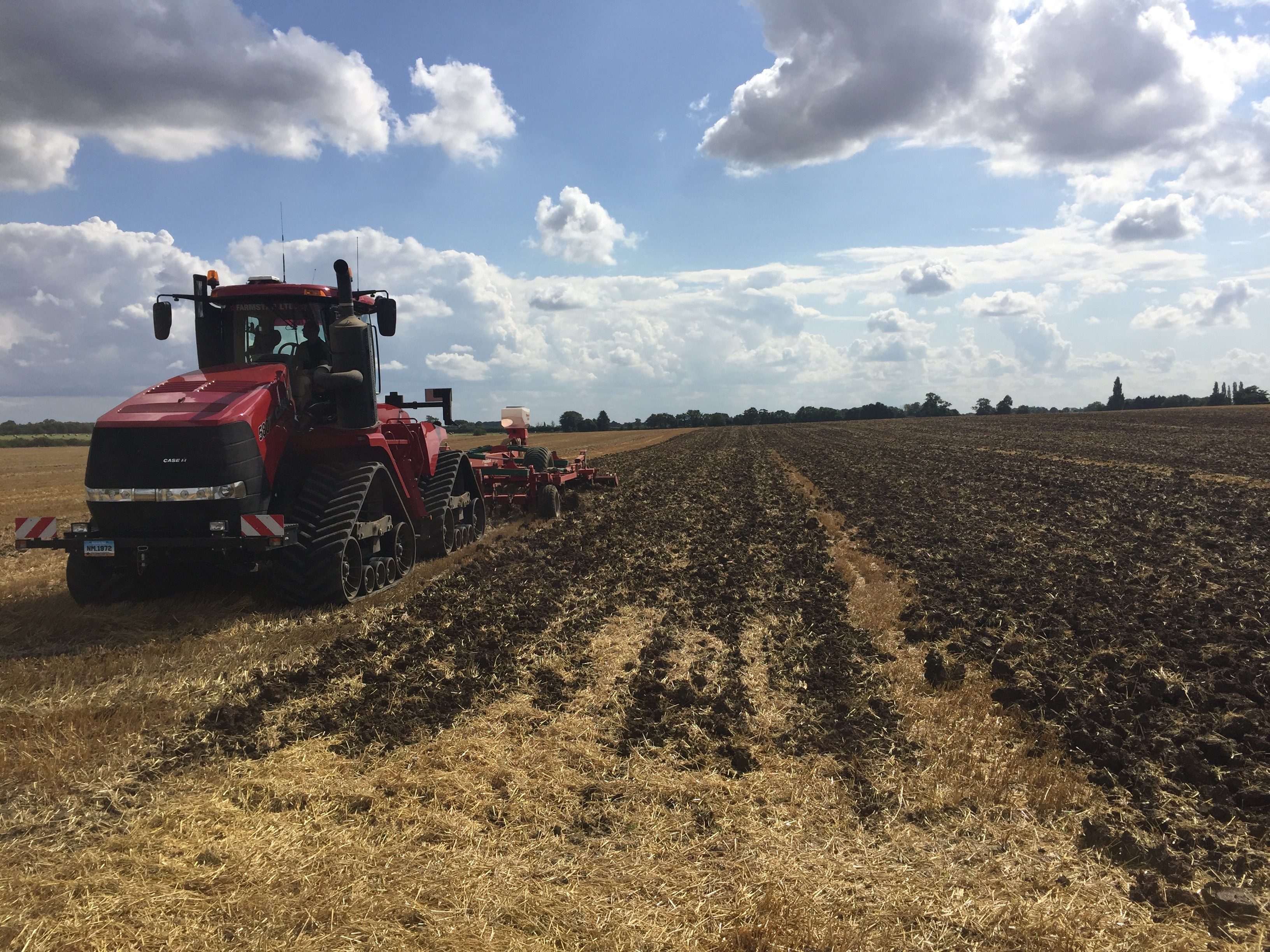
Drilling oilseed rape into a longer cereal stubble can significantly reduce damage from adult cabbage stem flea beetle regardless of sowing date or pest pressure, reveal CSFB farm innovation group trials run by ADAS for Bayer this season.
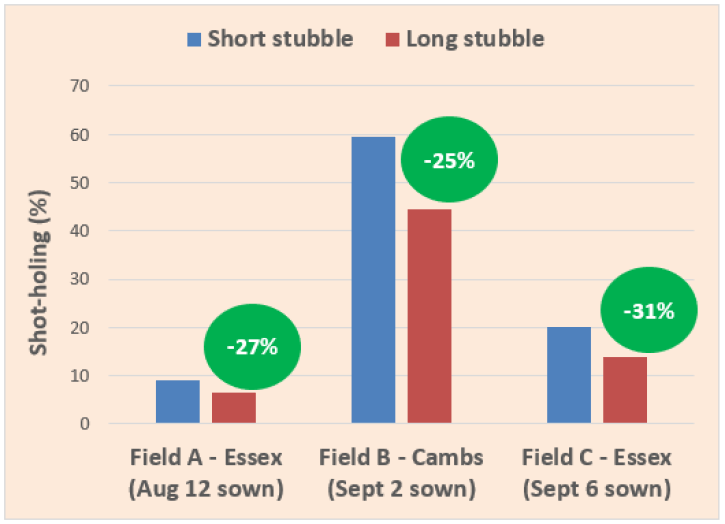
Consistent reductions of between 25% and 31% in shot-holing were recorded from direct sowing the vigorous, fast-developing hybrid, DK Excited into stubbles of around 30 cm (12”) against those of 15 cm (6”) in the field-scale strip trials on three farms in Essex and Cambridgeshire (Figure).
Figure: Adult CSFB damage to DK Excited sown into different lengths of cereal stubble
|
|
Source: ADAS/Bayer CSFB Management FIG Trials 2020
Drilled from August 12 to September 6, all the trial fields had sufficient moisture levels during establishment, with the earliest sown incurring noticeably less flea beetle damage overall than the later-drilled sites.
Less CSFB grazing during early establishment meant the crops sown into longer stubbles went into the winter with taller plants and generally higher plant populations than those sown into shorter stubbles too.
“This work provides the first independent scientific evidence of the anecdotal value of longer stubbles in systems which already have the CSFB management advantage of minimal soil surface disturbance,” notes Bayer OSR trials co-ordinator, Richard Phillips. “It confirms that alongside other measures, leaving longer stubbles can help crops tolerate adult grazing.
“Together with earlier sowing, the pioneering national study of cabbage stem flea beetle management we ran with more than 220 growers across the country last season highlighted the importance of hybrid varieties, in general, and fast-developing as well as vigorously-establishing hybrids in particular in coping with the pest.
“Leaving longer stubbles on its own was not identified as a particularly successful management technique in this study. So, its success is likely to depend on careful integration with other cultural controls.
“Interestingly, late November assessments in our trials also revealed higher larval populations per plant in the longer stubble sowings on two of the three farms,” he adds. “This is something ADAS believes warrants further investigation. It may further underline the importance of techniques like growing hybrids that develop earlier in the spring and winter defoliation considered to be valuable in reducing subsequent larval damage.”