Pioneering research identifies significant differences in 'resistance' of commerical OSR varieties to CSF feeding

Posted 6 years ago
12/11/2020
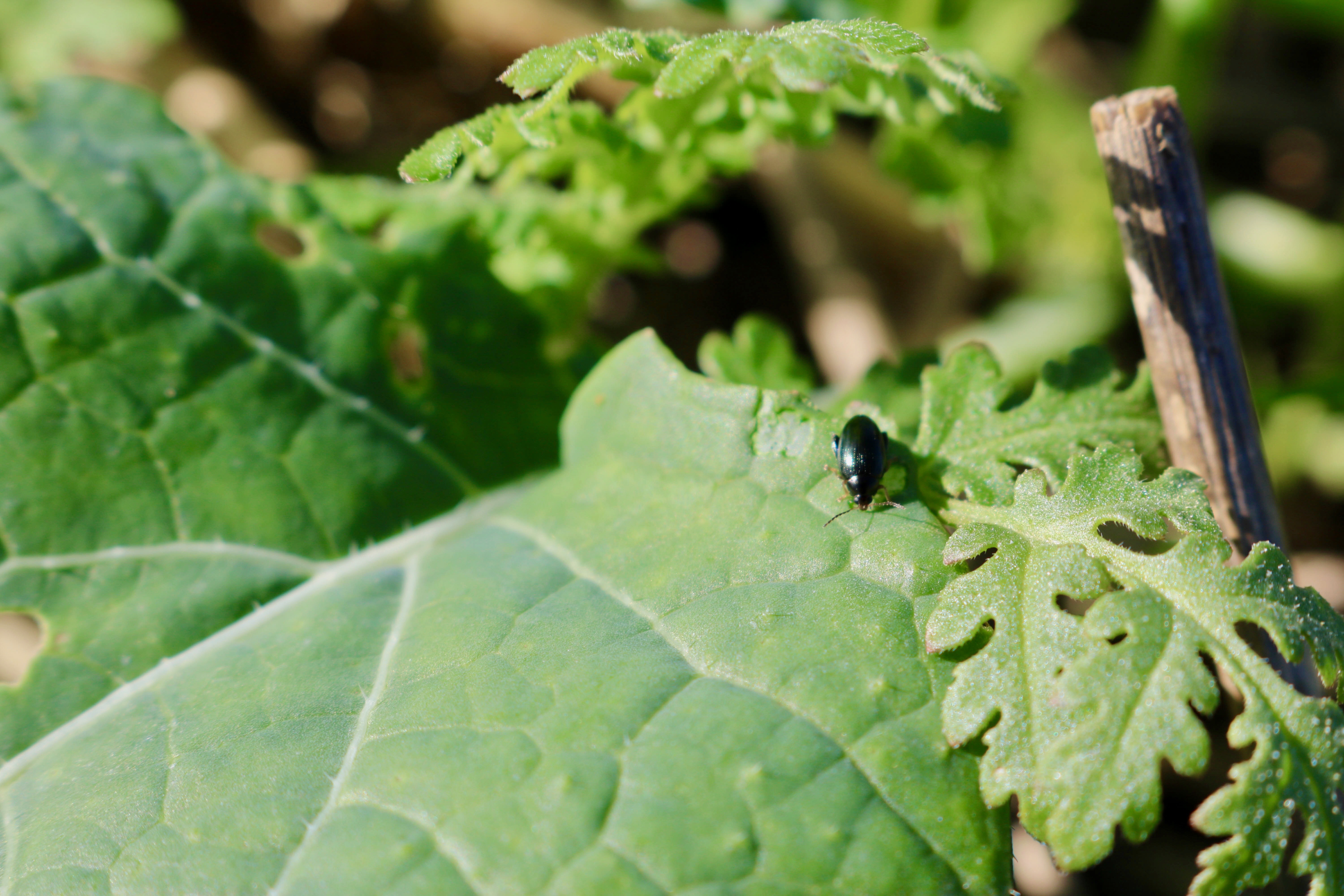
Significant differences have been identified in the resistance of leading commercial oilseed rape varieties to cabbage stem flea beetle feeding by John Innes Centre researchers as part of their pioneering work in helping the UK industry manage this pivotal problem.
The JIC Entomology growth chamber work conducted with a range of Dekalb hybrids from Bayer used the Centre’s captive CSFB colony to exclude the environmental variations affecting traditional field screening. It employed the methodology that has already shown marked differences in the adult flea beetle palatability of a diverse set of historic oilseed rape and other closely-related brassica genetics; differences that appear to be paralleled in initial field trials.
“While our original work highlighted potential sources of genetic resistance to CSFB feeding in oilseed rape, until now we had no idea whether variation was present within today’s elite breeding materials,” comments senior scientist, Dr Rachel Wells overseeing the latest study.
“Following our established protocol, we introduced 21-31 day old flea beetles into ‘no-choice’ feeding chambers containing seedlings of each variety. We removed the beetles after 48 hours and recorded the cotyledon damage.
“This varied widely, highlighting substantial differences in palatability. Averaged across our three replicates, at 12.2%, the most palatable of the five hybrids screened suffered more than twice the damage of the least palatable at just 5.6%. These differences were consistent across the replicates and statistical analysis showed them to be highly significant, giving us confidence they were real rather than likely to have occurred by chance.
“Clearly, there seems to be useful genetic variation present within the current commercial variety pool which can be identified and exploited in combating flea beetle,” Dr Wells concludes.
“Of course, the extent to which this will help limit adult feeding damage under field conditions remains to be seen. But it is a very promising start.”
Interestingly too, the JIC work confirmed previous studies showing beetle feeding activity declines quite with age, younger beetles being far more voracious than older ones; another finding which could be valuable in managing the pest either by later drilling or trap-cropping.
While the latest results are most encouraging, they come as little surprise to Bayer technical manager, Richard Phillips who is responsible for the company’s extensive Dekalb variety and agronomy research programme.
“The variety showing by far the least damage in the JIC screening was DK Expedient which our own trial work and that of others has consistently shown to be one of the most tolerant to cabbage stem flea beetle,” he points out.
“We have found much of this tolerance comes from a combination of especially rapid autumn growth allowing it to escape from adult grazing better than many other varieties and notably earlier spring growth than most which limits larval damage. To find it is also clearly less palatable than its peers is icing on the cake, reinforcing our view that it offers one of the best genetic defences against CSFB available.
“The fact that our outstanding fast developer, DK Extremus which matches TuYV resistant varieties in its performance also showed notably low levels of damage at less than 8% was particularly gratifying too.
“Planting the crop into sufficient moisture in good growing conditions and avoiding the peak of CSFB migration will allow most varieties to cope with the pest,” he notes.
“Where hybrids in general and those with less palatability, more rapid autumn and earlier spring development, in particular, really come into their own, though, is in reducing risks from the pest when establishment conditions are more challenging or CSFB pressures more intense. “Especially so, if supported by management techniques like minimal soil disturbance, long stubbles, companion cropping and seedbed fertilisation that having been proving valuable for many.”