Not only does that help get crops off to the best start, it will also help protect the operator, the environment and the products being used from the threat of being withdrawn.
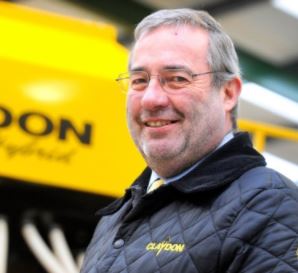
For Jeff Claydon, farmer and Managing Director of Claydon Drills, drilling stewardship encompasses everything from pouring seed to ensuring that seed is planted into the right conditions. As well as engineering drills, Mr Claydon farms over 600 acres in Wickhambrook, Suffolk, so is acutely aware of the best ways to ensure good practice.
“With some soils, and under more difficult conditions, seed can be poorly covered due to lack of tilth,” he says. “This can be with any drill in any method of planting. It’s so important to keep the seed covered to both help with germination and to prevent treated seed from being eaten by birds or mammals, and that comes down to planting in the right conditions.
“You’re looking for a nice tilth, with high humidity, and with the correct air to soil to water ratio. It’s no good throwing it into a sea of clods, or into wet, sticky clay where the soil won’t crumble over the seed.”
Ensuring the seed is covered is one of several things growers can do to maintain high stewardship levels. Alice Johnston, Applications and Stewardship Coordinator at Bayer, says: “It’s a very busy time of year, but growers must always follow best practice – it’s necessary in order to protect the operator and the environment, as well as to give your crop the best start.
Mr Claydon and Ms Johnston outline 5 tips for growers to keep in mind during the drilling period:
1. Maintaining the right speed ensures that you avoid a build-up of seed
“It’s especially important that you slow down when you’re coming to the end of the field,” Mr Claydon notes. “If you’re going fast you can have a lot of seed in the coulter which can be distributed on the headlands when you turn.”
2. Wear Personal Protective Equipment (PPE)
This includes gloves, glasses, masks, coveralls and boots. “Drilling is just like spraying,” Ms Johnston says. “You’re handling chemicals, so the operator needs to make sure they’re protected. It can be easy to handle treated seeds without thinking – avoiding contaminating yourself is crucial.”
3. Reduce dust by minimising the distance between bag and drill when pouring, and direct dust produced by the drill into the soil
“You should also ensure you use quality, well-cleaned seed with a professionally applied treatment,” Ms Johnston adds. “If the treatment has been applied correctly there should be minimal dust.”
4. Avoid seed spillages by ensuring drilling equipment is properly maintained and doesn’t leak seed
When filling the drill, growers should make sure it is on a surface that can easily be cleared in the event of a spill (i.e. not on grass). Always carry a spill kit, consisting of a spade, a spare bag to save recovered seed, and a canvas sheet to use when calibrating the drill.
5. Remember that stewardship continues after drilling
“All the seed should be removed from the drill, and collected in labelled bags to be disposed of safely,” Ms Johnston says. “But you should never re-use bags except to store the original treated seed.”
It’s also good practice to assess whether or not a follow-up aphid treatment is needed if you have used Deter, Ms Johnston adds. “Using Deter reduces the need for non-selective insecticide sprays, but it is always important to assess your risk in season to see if a follow-up spray is actually required.
“Milder autumns and winters can cause unusually late aphid activity, especially in high risk areas. You should consult AHDB thresholds and inspect the crop, but as a guide, early September drillings may need a follow up spray 6-8 weeks after drilling; mid-late September drillings after 8-10 weeks and early October drillings after 10 weeks.’