Resistance drives grassweed problems

Posted 9 years ago
12/07/2017

In total, over 80% of growers are experiencing black-grass resistance problems, with nearly two thirds rating these as serious or very serious (Figure). In contrast, only around a third reported more than slight problems with resistance in a parallel study back in 2000.
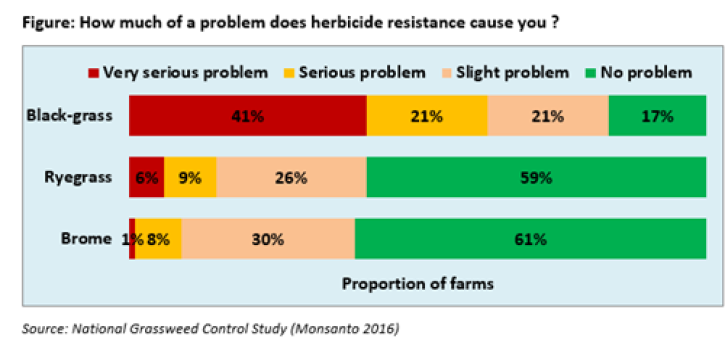
At the same time, more than 40% of growers are now reporting herbicide resistance problems with ryegrass, over half of these being rated as serious or very serious.
Resistance has yet to be scientifically confirmed in bromes in the UK. However, the fact that a similar proportion of growers consider it to be causing them a problem and nearly a quarter of these more than a slight problem sounds a clear warning bell in this context.
Problematic on more than 90% of farms in central and eastern England, black-grass resistance remains noticeably less widespread in other parts of the country. However, even in the least affected northern area, two thirds of growers are encountering some resistance problems with nearly 40% of these rating them as serious or very serious.
Although it may, in part, reflect a regional bias, resistant black-grass problems are both less widespread and less severe where winter cereals are established with plough-based systems than under minimum tillage or no till regimes.
Understandably perhaps, reported herbicide resistance problems with both ryegrass and brome are relatively more widespread in the west and north of the country than they are in other regions. There is also a suggestion they may be more associated with reduced tillage than plough-based winter cereals establishment.