Major shift in control practices

Posted 9 years ago
12/07/2017

The increasing difficulties being caused by grassweeds are clearly reflected in the changes recorded in both chemical and cultural control practices by extensive grower studies conducted by Monsanto over the years.
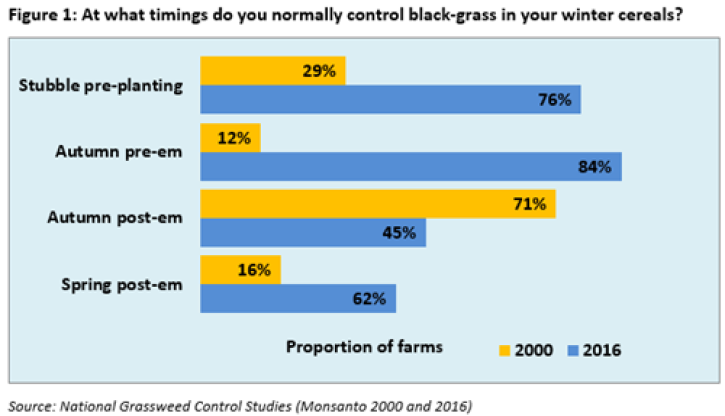
Back in 2000 autumn post-em spraying was the overwhelming chemical control priority for black-grass, with only minorities of growers employing spring post-em, autumn pre-em or stubble pre-planting sprays. By 2016, though, the primary emphasis of chemical control has swung emphatically to stubble pre-planting and pre-emergence treatment (Figure 1).
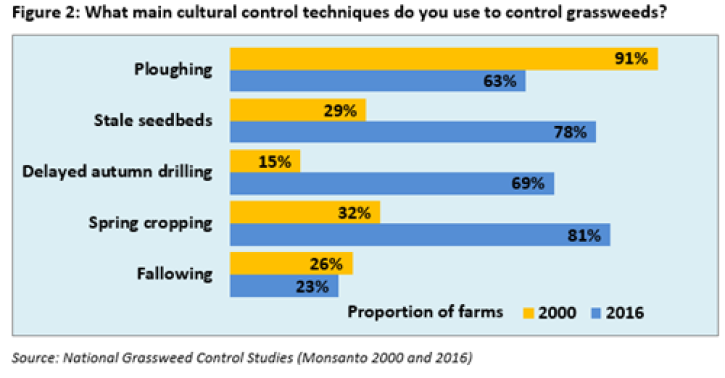
In parallel to this, alongside the workload-drive decline in ploughing, there’s been an equally big swing to stale seedbeds, delayed autumn drilling and spring cropping for cultural control (Figure 2).
On average, the 2016 study shows growers employing 2.4 sprays per year to control black-grass. This rises to 3.0 per year where resistance problems are serious or very serious, with greater emphasis put on all spray timings, particularly stubble pre-planting and autumn post-emergence.