Black-grass economic impact

Posted 10 years ago
19/12/2016
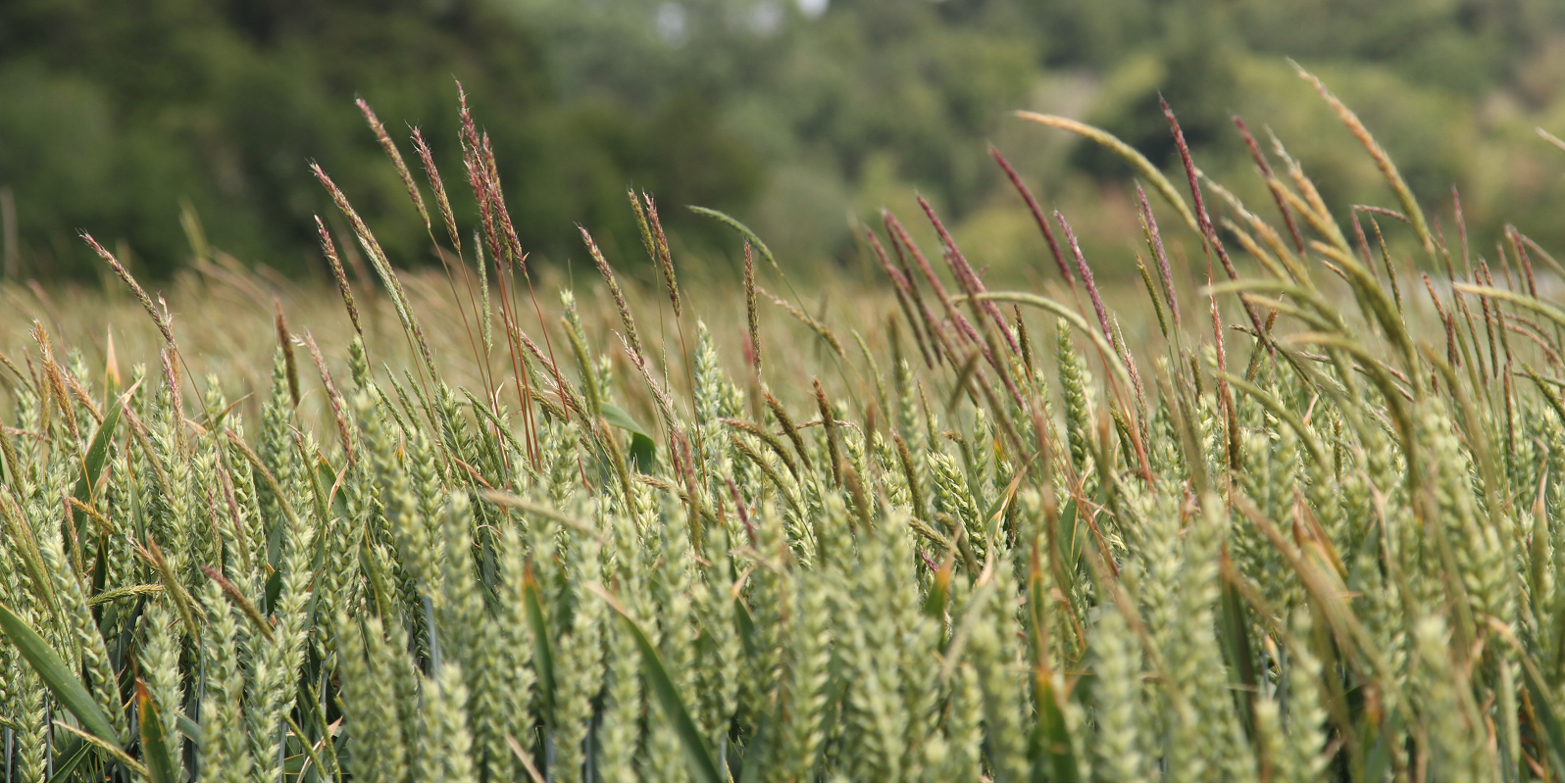
Black-grass can seriously reduce arable crop yields through competition for nutrients, especially nitrogen. Effects on crop yield vary greatly due to the relative competitiveness of crop and weed - a competitive crop can effectively suppress black-grass. Typical losses are shown in the table – but much higher losses are likely in uncompetitive crops.
Typical yield losses from black-grass in winter wheat crops
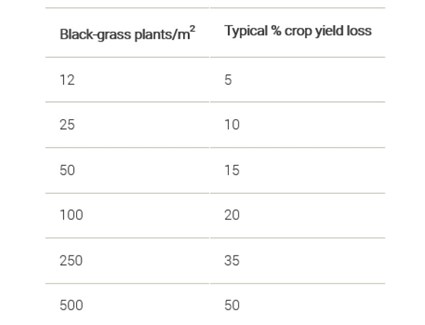
A weed density that causes a 5% yield loss is often used as a threshold value at which herbicidal control is justified to prevent unacceptable loss. For black-grass in winter wheat this is, on average, 12 plants/m2.
However, because of the risk of higher yield losses, the potential for rapid population increase and the difficulty of assessing weed densities on a field scale, applying herbicides to control black-grass at much lower densities is advised – even at less than 1 plants/m2 in high risk situations.
There are three main reasons:
First found in the UK in 1982, herbicide-resistant populations now occur on virtually all of the 20,000 farms where black-grass occurs. Populations show variable degrees of resistance to a wide range of different modes of action, with both ACCase and ALS target site resistance (TSR) and non-target site resistance (NTSR), especially enhanced metabolism, now widespread.
Non-target site - principally enhanced metabolism - results in herbicide detoxification and is the commonest resistance mechanism in black-grass It affects most herbicides to varying degrees, but only in severe cases results in complete loss of control. Tends to increase slowly.
AC Case target site - blocks the site of sulfonylurea and related herbicides. It only affects these groups of herbicides, but often results in poor control and can increase rapidly.
ALS target site - blocks the site of activity of sulfonylurea and related herbicides. It only affects these groups of herbicides, but often results in poor control and can increase rapidly.